What types of business software should NOT be used on a SaaS model?
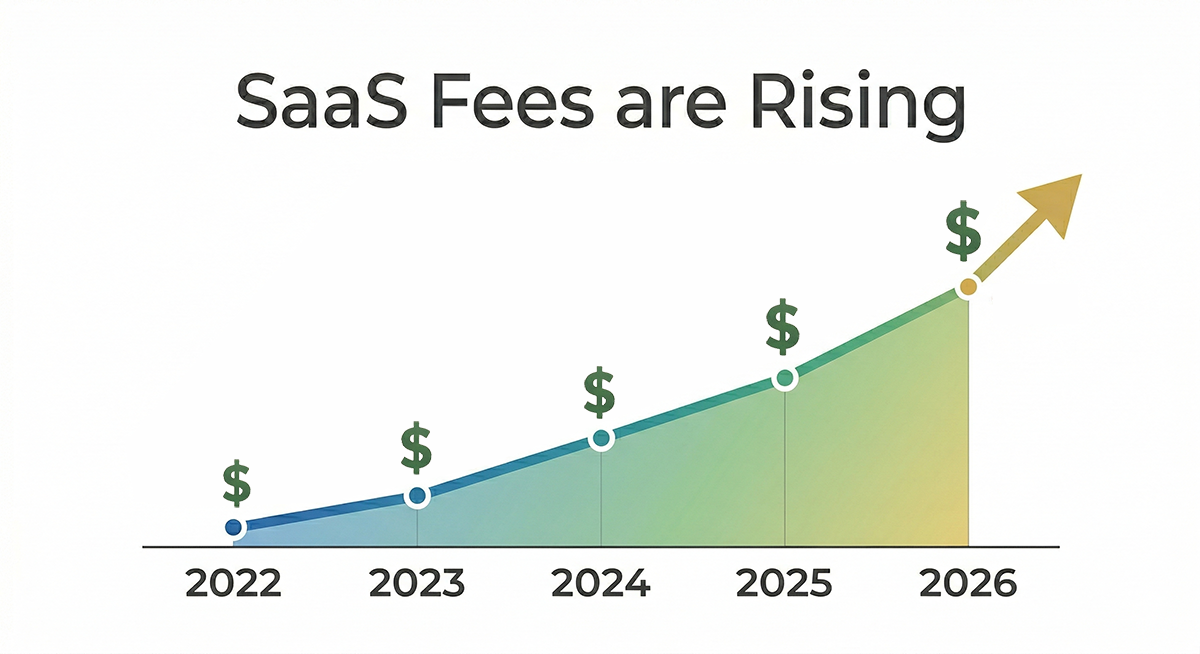
That’s something I’ve been thinking about lately as I read more and more cases of rising SaaS costs. The fact is, most businesses are paying more for their SaaS tools than they were last year. Same tools and users, just a bigger bill.
73% of SaaS companies raised prices in 2025, averaging 14.2% increases. SaaS inflation is running at roughly five times the general rate. CIOs now spend about 9% of their IT budget just absorbing price hikes on software they already have. According to Zylo’s 2025 SaaS Management Index, SaaS spending per employee hit $4,830 last year, up 21.9% from the year before.
For mid-market companies, per-employee spend jumped 40%. Gartner estimates 25% of all SaaS spend is wasted or underutilized. And 78% of CFOs say they’ve been blindsided by hidden fees or price hikes baked into their contracts.
The vendors aren’t subtle about this anymore. A few examples from the last two years:
- Broadcom/VMware: Customers reported 300% to 1,050% cost increases after the acquisition. A Forrester analyst called them “wildly insane price increases in the name of saying either you pay us what we want or you’re out of here.”
- Adobe: The FTC and DOJ sued Adobe for hiding cancellation fees and making subscriptions deliberately hard to cancel. $150 million settlement finalized March 2026.
- Microsoft 365: Announced price increases of 5% to 33% depending on the plan. Block64 called it “not a routine price adjustment… a forcing event.”
- Atlassian: Killed server licenses entirely, forced everyone to cloud, then pushed two rounds of price increases back to back. Some customers reported increases over 150%.
One CIO summed up the takeaway from the Broadcom situation: “We do not want to get trapped again.”
To some extent, price increases come with the territory when you rent software. For some types of software, that tradeoff is manageable. For others, it quietly becomes a trap. The difference comes down to what happens when you try to leave.
In this article, we’ll explore what types of software are great for a SaaS model, and what types are bad. But first, let me define a couple of terms. You probably know these already, but I want to make sure we’re on the same page.
What is Software-as-a-Service (SaaS)?
SaaS is a licensing model where you pay a recurring fee, usually monthly or annually, to access software that the vendor hosts. You never own the software. If you stop paying, you lose access. Most SaaS products also charge per user, so your costs grow as more people in your organization use the tool.
What’s good about SaaS: Low upfront cost. You don’t need to install or maintain anything. Updates happen automatically. For many types of software, this is a perfectly reasonable tradeoff. You’re paying for convenience, and the vendor handles the infrastructure.
What’s not so good: You’re on the hook forever. Prices go up, often significantly, and you have limited leverage to push back. If the vendor gets acquired, changes direction, or decides to restructure their pricing tiers, you absorb the impact. And if you ever want to leave, you walk away from everything you’ve built on the platform.
What is a perpetual license?
A perpetual license is the opposite. You pay once and the software is yours. You install it on your own infrastructure, you control it, and it doesn’t stop working if your relationship with the vendor changes. Some perpetual licenses include optional maintenance fees for updates and support, but the license itself doesn’t expire.
What’s good about perpetual: You own it. Your costs are predictable. You’re not subject to annual price increases on the license itself and don’t need to worry about user fees. And you’re never in a position where canceling a subscription means losing access to the tools your business runs on.
What’s not so good: Higher upfront cost. You’re responsible for hosting and infrastructure. And perpetual licenses are getting harder to find, because SaaS is more profitable for vendors. That last point should tell you something.
In short: SaaS = renting software. Perpetual = owning software.
The big question is: which types of software fall into which category? Which ones are fine for SaaS, and which ones are better as perpetual?
What makes software “good” for a SaaS model?
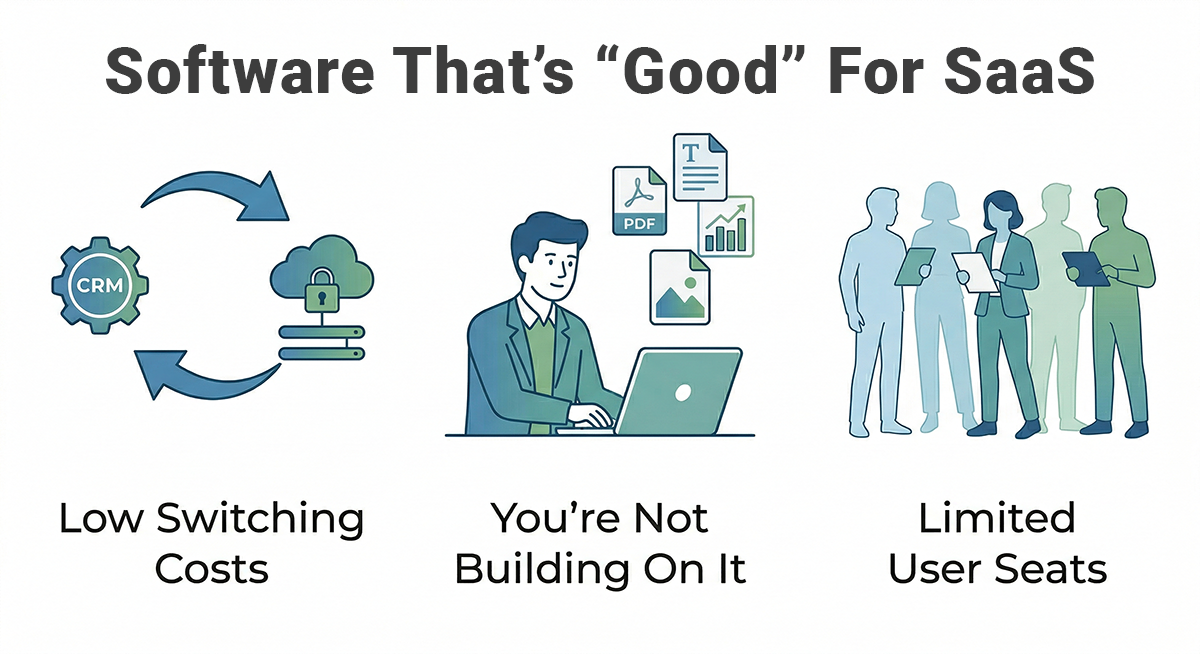
I want to be clear: I’m not anti-SaaS. For a lot of business software, SaaS is the right model. Here’s what makes a tool a good fit for subscription licensing:
Low switching costs. If you can move to a competitor in a few weeks without losing your work, the vendor can’t hold you hostage at renewal time. I’m talking about things like email marketing platforms, video conferencing, file storage, project management, etc… You can export your data, set up somewhere else, and keep going.
You’re not building on top of it. This is the big one. With most SaaS tools, the tool does a job and your work product exists independently. Your emails, files, and project plans belong to you. The tool helped create them, but it doesn’t own them.
Limited user seats. If you’re paying for hundreds (or thousands) of per-user seats, price increases will hit you especially hard. Even if your per-user cost increases by $1, you’re looking at big monthly spending increase.
When those things are true, SaaS is a fair deal. You’re renting a capability, and if the price gets out of hand, you leave.
What makes software “bad” for a SaaS model?
Here’s where it gets tricky. Some categories of software are genuinely dangerous to rent: Things like database engines, ERP systems, security infrastructure, and development platforms all fall into this bucket. Here’s what makes software a bad fit for subscription licensing:
High switching costs. If switching means rebuilding every application your team has created, retraining everyone who uses it, and migrating every integration, that software has high switching costs. For most companies, it’s not realistic at all. Also, the longer you use the platform, the harder it gets to leave. The vendor knows this.
You’re building on top of it. This is where it really hurts. Your applications, workflows, and integrations all live inside that vendor’s ecosystem. Cancel the subscription and you don’t just lose the tool. You lose everything you built with it.
Let’s take a development platform for example. Suppose you license a low-code development tool on a SaaS model. You build your first app. The subscription feels reasonable. Six months in, you’ve built a few more. Your team has learned the platform. Business processes are running through what you’ve created. Three years in, you have 20 or 30 applications in production. Your business depends on them.
Then the vendor raises prices. What do you do?
Chances are, you have a lot of users. You can’t take your applications with you if you leave. You’d have to switch to a new platform, retrain your users, and rebuild everything. That’s a huge hurdle…and the vendor know this.
Look at it this way: If you license a development tool on a subscription, your lock-in increases with your success. The more you depend on it, the harder it is to leave.
You built it, but you don’t own it
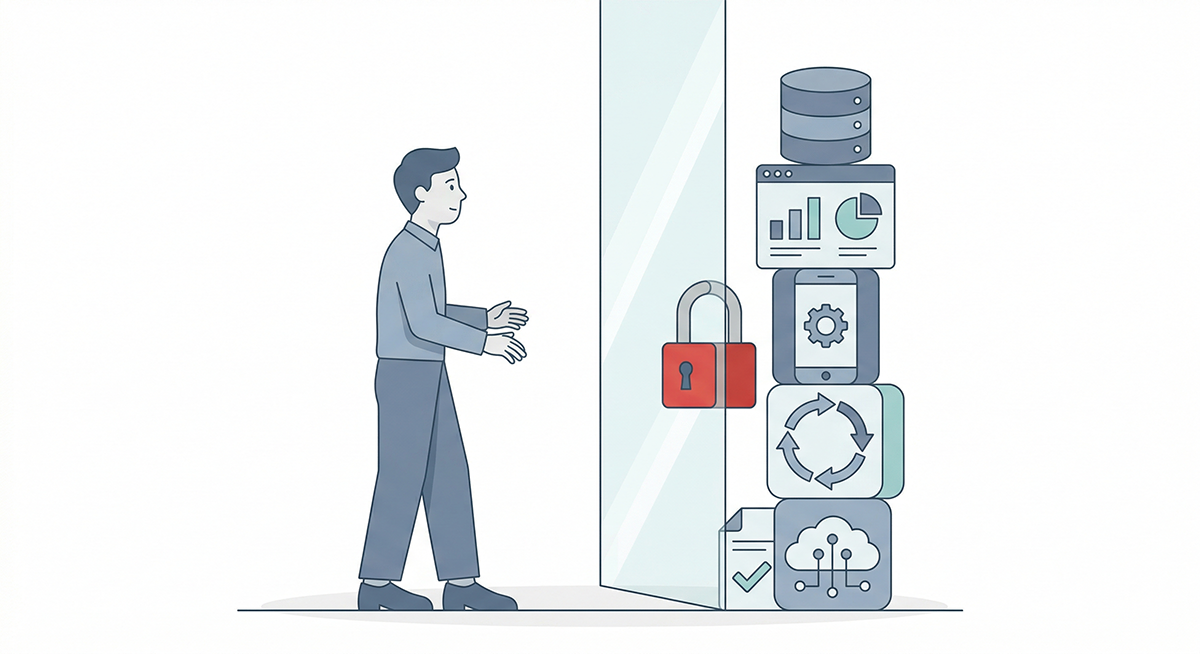
This is the part that catches people off guard. Your team designed the applications, built the logic, configured the workflows, connected the integrations. Your data powers all of it.
But you don’t own any of it.
Cancel the subscription and those applications stop working. The code won’t run without their platform. The workflows don’t exist outside their environment. Three years of your team’s work, gone. All because you stopped paying.
Try explaining that to your CEO. “We built 30 applications, but we don’t actually own them. If we leave, we start over.”
That’s the real cost of renting a development platform. It’s not just the subscription. It’s the fact that everything your team creates belongs to someone else’s ecosystem. You’re paying for the privilege of building assets you can never take with you.
What to look for in a low-code platform beyond cost
If you’re evaluating low-code development platforms and you want to avoid waking up three years from now with a vendor who owns your business applications, here’s what to ask:
Do you own what the platform generates? Can you run the code independently if you ever leave? Or does everything stop the moment you cancel?
Does it run in your environment? If the platform runs on your infrastructure, over your databases, using your authentication, you keep control. Your data stays yours. Your security model is yours. If you part ways with the vendor, your applications and data stay with you.
Are there per-user fees? If yes, do the math at scale. What does this cost at 200 users? At 500? If the answer changes your calculus, that’s the trap.
What happens when you hit the limits of the builder? This is one of the most common frustrations with low-code platforms. You build 80% of what you need with the visual tools, then the last 20% requires workarounds or isn’t possible at all.
What’s the support like? Development platforms with a perpetual license will generally have better support. Why? Because the vendor knows you’re not locked in. If the support isn’t amazing, you can stop paying for support and still use the software. Simple as that.
m-Power: One of the only low-code platforms available on a perpetual license
Most low-code vendors have moved to SaaS-only pricing. We haven’t. We still offer a perpetual license because we believe you should own the platform you build your business on.
Our development platform, m-Power is one of the only low-code platforms still available on a perpetual license, with no per-user or per-app fees. m-Power installs on your infrastructure, connects to your existing databases, and everything your team builds runs in your environment. You own the output.
It’s also one of the most customizable low-code tools on the market. When you hit the limits of the visual builder, you can drop into the generated code and modify it directly. There’s always a way forward.
As Robert Reeder, CIO at Henley Enterprises, put it after evaluating alternatives: “There’s not the level of customization in PowerApps that you have in m-Power.”
If a project goes beyond what your team can handle, mrc’s services team picks up where you left off. 96% of first-time services clients come back for more projects.
The one question to ask before you sign
Next time you’re looking at a development platform subscription, ask this: what happens to everything I’ve built if I cancel?
If the answer makes you uncomfortable, that’s the lock-in. And it only gets worse the longer you stay.
Some software is fine as a subscription. The development platform you build your business on isn’t one of them.
If you’re trying to figure out what owning your development platform looks like for a team like yours, we can show you what other teams have built with m-Power. We often build something directly over your data during the demo so you can see exactly how it works in your environment.
See it for yourself: Request a Demo
Frequently asked questions
What is the difference between SaaS and a perpetual license?
SaaS is a recurring subscription for access to software the vendor hosts. You pay monthly or annually. A perpetual license is a one-time purchase. You own it. With SaaS, you lose access when you stop paying. With a perpetual license, the software stays yours.
Why are SaaS prices increasing so fast?
SaaS pricing rose 11.4% in 2025, roughly four times the rate of general inflation. 73% of SaaS companies raised prices that year. Vendors push these increases through because switching costs are high, especially for platforms where customers have built workflows, integrations, and business processes. Many vendors also bundle AI features to justify premium pricing.
Is a perpetual license cheaper than SaaS long-term?
For development platforms and tools you plan to use for years, a perpetual license is significantly cheaper long term. While a SaaS platform will be cheaper upfront, the recurring costs will slowly catch up and far surpass a perpetual license.
What is m-Power?
m-Power is a low-code development platform built by mrc. It installs on your infrastructure, connects to your existing databases, and lets your team build web applications, AI tools, reports, dashboards, and portals. mrc has been helping businesses build custom applications since 1981, with over 1,500 customers.
How does low-code platform pricing typically work?
Most low-code platforms charge per-user, per-month, with costs that scale as your team grows. Some add per-app or per-workflow charges. m-Power uses a one-time perpetual license with no user, app, or data limits, making total cost predictable from day one.
Can you avoid vendor lock-in with a low-code platform?
Yes, but it depends on the platform. Look for: code you own and can run independently, deployment on your own infrastructure, direct connection to your existing databases without migration, and no per-user pricing that penalizes growth. m-Power is built so your applications and data remain yours regardless of your relationship with the vendor.