mrc's Cup of Joe Blog

Join us in exploring the world of modern development, evolving technologies, and the art of future-proof software

Low-code

How to Choose the Best Low-Code Development Tool for Your Business

EducationLow-code development has taken the tech world by storm. According to Gartner, the low-code market will grow from $18 Billion in 2021 to $32 Billion by 2024. It’s picking up steam and shows no signs of slowing down.

The problem: As demand grows, so does the total number of platforms on the market. Anyone looking around for a low-code tool will find hundreds to choose from.

The worst part is, they’re all different. They all have different capabilities, strengths, and weaknesses. Some focus on mobile while others focus on workflow. Some offer reporting/dashboarding features while others don’t. I could go on.

How do you know which one is best for your business?

The answer: It depends on your business, needs, budget, etc… To help you cut through the confusion, we’ve written up whitepaper that goes into more detail on the topic. It explains key areas to consider when looking for a low-code tool, and will hopefully make the process less painful. You can find it here: How to Choose the Best Low-Code Platform for Your Business

Video: Create a database CRUD application in 5 minutes

analyticsWe just released a new video that shows you how to create a database CRUD application in 5 minutes using a low-code development tool. If you’re not familiar with CRUD, it stands for Create, Read, Update, and Delete, and it’s a fundamental concept in database management.
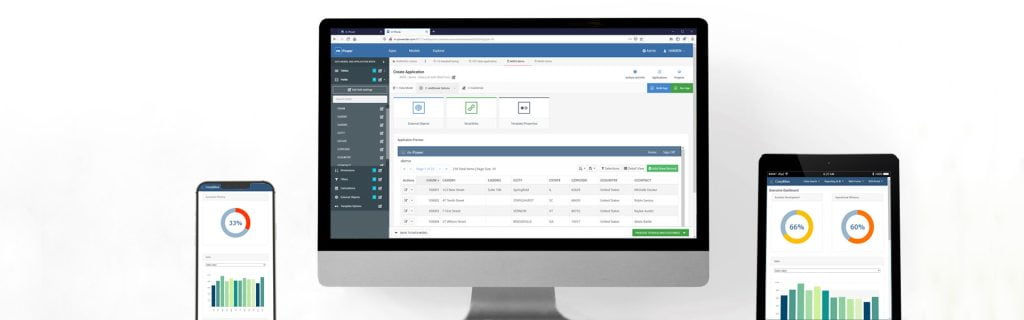
A CRUD application lets you perform these four basic operations on a database table. I know…this might not sound very exciting. But CRUD applications are the backbone of most modern software applications.

Case Study: How to get the most out of low-code

When most companies look at low-code software, they’re trying to fix a specific need. Maybe they get it to create a specific web application or system, speed up development, or help their end users create the applications they need. Of course, it’s great for all of that. But…it can be so much more.

The fact is, most companies aren’t getting the maximum value out of their low-code investment. If you’re only using it to solve one problem or help in just one area of the business, you’re missing out.

Case Study: Low-code doesn’t mean low customization

developmentThere are many myths floating around about low-code software. One of the most common myths: Low-code means low customization. There’s a general belief that low-code tools offer limited customization and functionality. Many believe there’s no way to add features or customize the output to perfectly fit their organization’s needs.

The reality: Every low-code platform is different, especially when it comes to customization. The problem is, when people use a basic low-code tool that limits their options, they assume that all low-code tools are similar. This isn’t the case.

The fact is, many enterprise-class low-code tools won’t have these limitations. You can customize applications however you wish. You can add custom logic or features if needed. You can even edit at the code level on some tools.

Here’s a case study that provides a great example of this. An automotive service company needed a way to create web applications and workflows that could be:

  • customized to their exact business needs
  • integrated with their existing systems
  • used to securely capture, share, and manage data across distributed locations
  • created and delivered quickly

After trying other low-code tools that lacked important features and customization options, they discovered the m-Power Development Platform. Read the whole case study to learn how m-Power addressed their needs and why they say, “m-Power owns the space on customization in terms of how well it integrates into what you’re doing and how easy you make it.”

38 important low-code statistics and facts for 2022

trendsSince the term was first coined by Forrester back in 2014, low-code software has really picked up steam. The pandemic (and the subsequent move to remote work) only furthered its adoption.

The recent spike in low-code usage got me thinking: What does the low-code market look like now? Where will it be in a few years? How are modern businesses using low-code?

To answer those questions, I did some research. I’ve found many different low-code reports, studies, and surveys and compiled those statistics into this article. One thing to keep in mind while you’re reading: Some of these surveys and statistics say similar things, especially when it comes to predictions. I included them because they help paint a complete picture. Low-code is growing and will continue to grow in the coming years. How much will it grow? That’s hard to say. But multiple studies and research firms agree on one thing: The low-code market isn’t slowing down anytime soon.

5 important questions to ask about low-code software

trendsIf you’re at all considering low-code software, there are a few things you must understand:

First, there are hundreds of low-code tools available these days…and new ones are constantly popping up. You can’t possibly evaluate every option.

Second, they’re all different. This is a big deal because most people think low-code tools are generally the same. They’re not. They have different features, interfaces, and development approaches. Some are great in certain areas but poor in others. Some are customizable. Others are not. As a result, comparing your options is tricky. Depending on your needs, some tools will fit better than others.

Finally, there’s really a lot to know about development tools in general. The problem is, not everything is obvious until you really get into them…some of which will come back to bite you if you’re not prepared.

The big question: What ‘not-so-obvious’ areas should you look at in a low-code tool?

We created a video to help you answer that question. We’ve compiled our best advice into 5 important questions to help you identify the ideal low-code platform for your business. You can watch it right here:

10 must-have features of enterprise low-code software

trendsSummary: These days, choosing the right low-code tool can be confusing. Since each one has differing features and goals, comparing your options is becoming more and more difficult. How can you avoid surprises or “gotchas” when selecting a tool? How can you find the right low-code tool for your business? In this article, we explore 10 critical features to look for in any low-code tool.